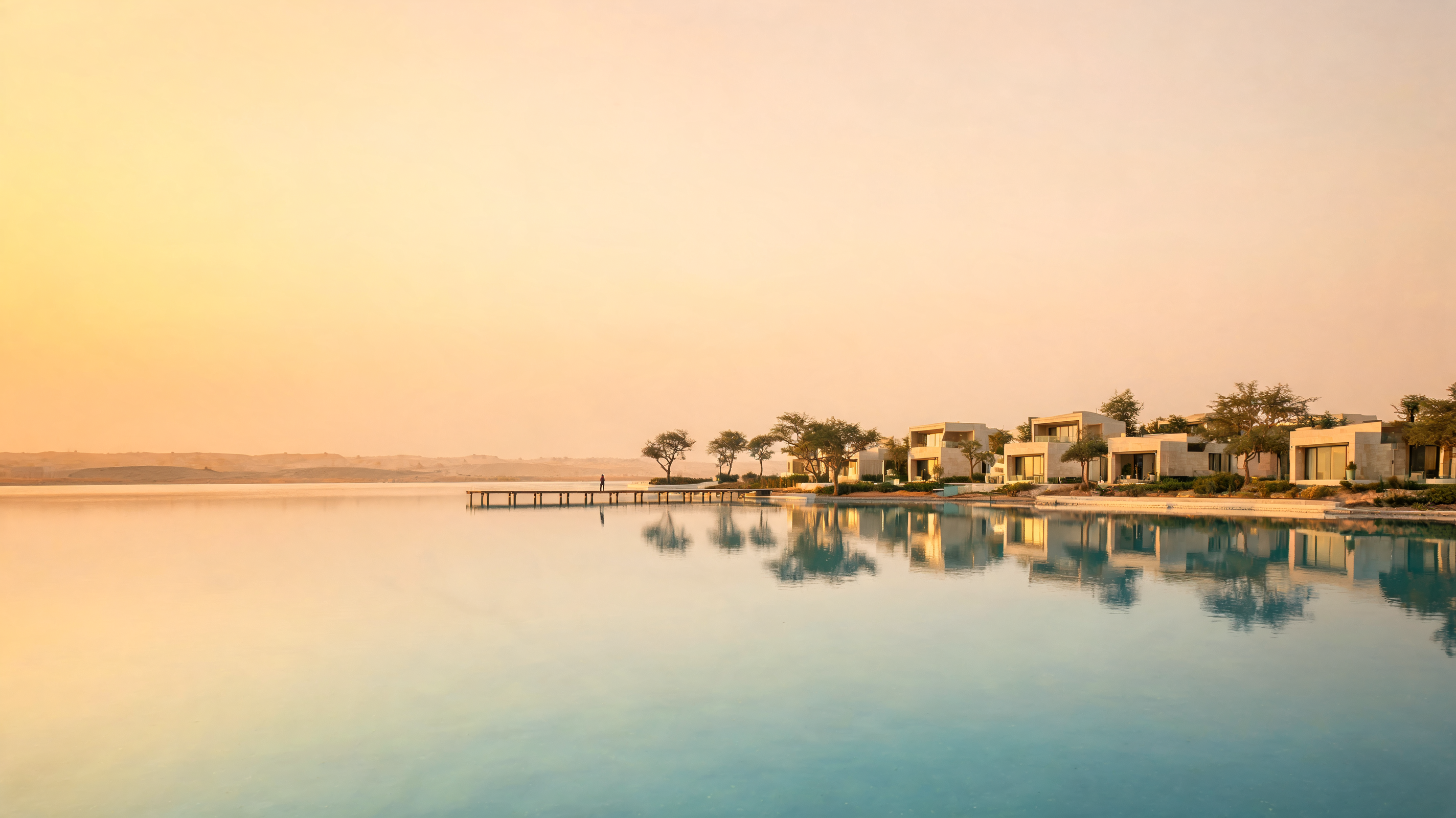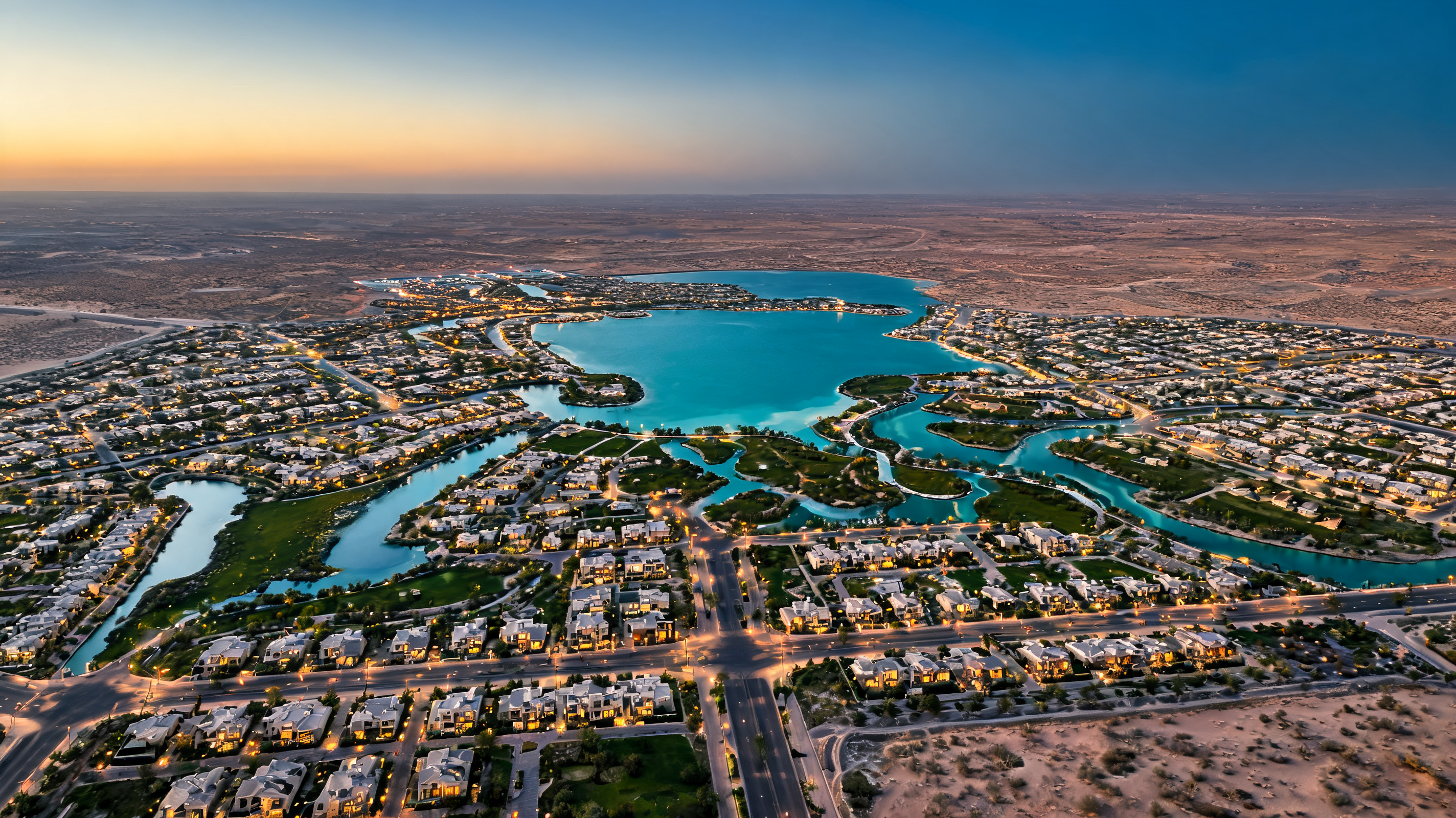
Numbers rarely tell you how a place will feel. Arabian Hills Estate covers 244 million square feet, a figure large enough to lose its meaning, and the people drawing it know that. What they are trying to protect, they say, is not the acreage but the quiet between things.
01
A landscape read before it is built
The first drawings did not begin with buildings. They began with the ground, its slopes, the way heat pools in the low stretches after noon, the handful of directions from which a breeze actually arrives. Idris Bello, the estate's lead masterplanner, describes the early months as mostly walking and measuring. "You earn the right to place a road," he told me over coffee at the site office. "Most of the mistakes I have seen in this region come from deciding the plan on a screen and forcing the land to agree."
That patience shows in the framework. Neighbourhoods sit where the terrain already offered shelter. Longer views were left open on purpose, so that arrival unfolds in stages instead of dropping you at a gate. It is an old idea, really, borrowed from garden cities and older desert settlements alike, and the team is unbothered about that lineage. Dubai has spent two decades proving it can build fast. The harder question, Bello argues, is whether a place can be built slowly enough to still feel considered in thirty years.
“You earn the right to place a road. The land has to agree before the plan does.”
02
Water as the organising idea
At the centre sits a swimmable lagoon, and it does more work than a photograph suggests. Man-made lagoons have become a recognisable feature of master-planned communities across the UAE over the past ten years, partly for lifestyle and partly because a large body of water moderates the microclimate around it. Mariam Al Suwaidi, the landscape architect leading the planting strategy, is candid that the appeal is both practical and emotional.
"People assume the lagoon is decoration," she said. "It is also a cooling device and a gathering point. In a climate like this, shade and water are not luxuries, they are the difference between a park you use and a park you photograph once." Her team has drawn the shoreline to change character as you move along it, busy near the promenades, planted and slow near the residential edges. The intent is that the water belongs to the whole estate rather than to the homes lucky enough to touch it.
03
Designing for a full day, not a showroom
What separates a masterplan from a marketing render is whether the ordinary hours have somewhere to go. Schools, clinics, riding facilities, wellness spaces and neighbourhood retail were folded into the plan at the outset rather than added once the villas sold. The logic is simple enough: a community that makes you drive forty minutes for a loaf of bread is not really finished.
There is realism here too. Large phased developments in the region have a mixed record, and residents who buy early often live beside construction for years. The team's answer is to sequence the shared landscape and infrastructure ahead of the housing, so the first arrivals inherit working parks and roads rather than promises. Whether that discipline holds under commercial pressure is the open question, and the people running the project seem to know it. For now the ambition is legible on the ground, which is more than most plans this size can claim.
04
Measuring a plan against time
Ask Bello how he will know whether the plan worked and he does not reach for a sales figure. He talks about the second generation. "The real test is the child who grows up here and, twenty years on, chooses to raise their own family in the next street rather than leaving," he said. "You cannot fake that. It either becomes a place people are loyal to or it becomes an address they trade out of." It is an unusually patient way to judge a development in a market that tends to measure everything by the quarter.
That patience has a cost, and the team does not hide it. Holding open land, sequencing the slow infrastructure first, refusing the easy density that would lift early returns, all of it trims the short-term numbers. Al Suwaidi frames it as a wager rather than a virtue. "We are betting that restraint compounds," she said. "The plots we did not build on are the reason the ones we did will still feel generous in thirty years. If we are wrong, we left money on the table. If we are right, we built something that keeps paying the people who live here, not just the people who sold it."
By Layla Haddad, for the Arabian Hills Journal.